Last updated November 23, 2026
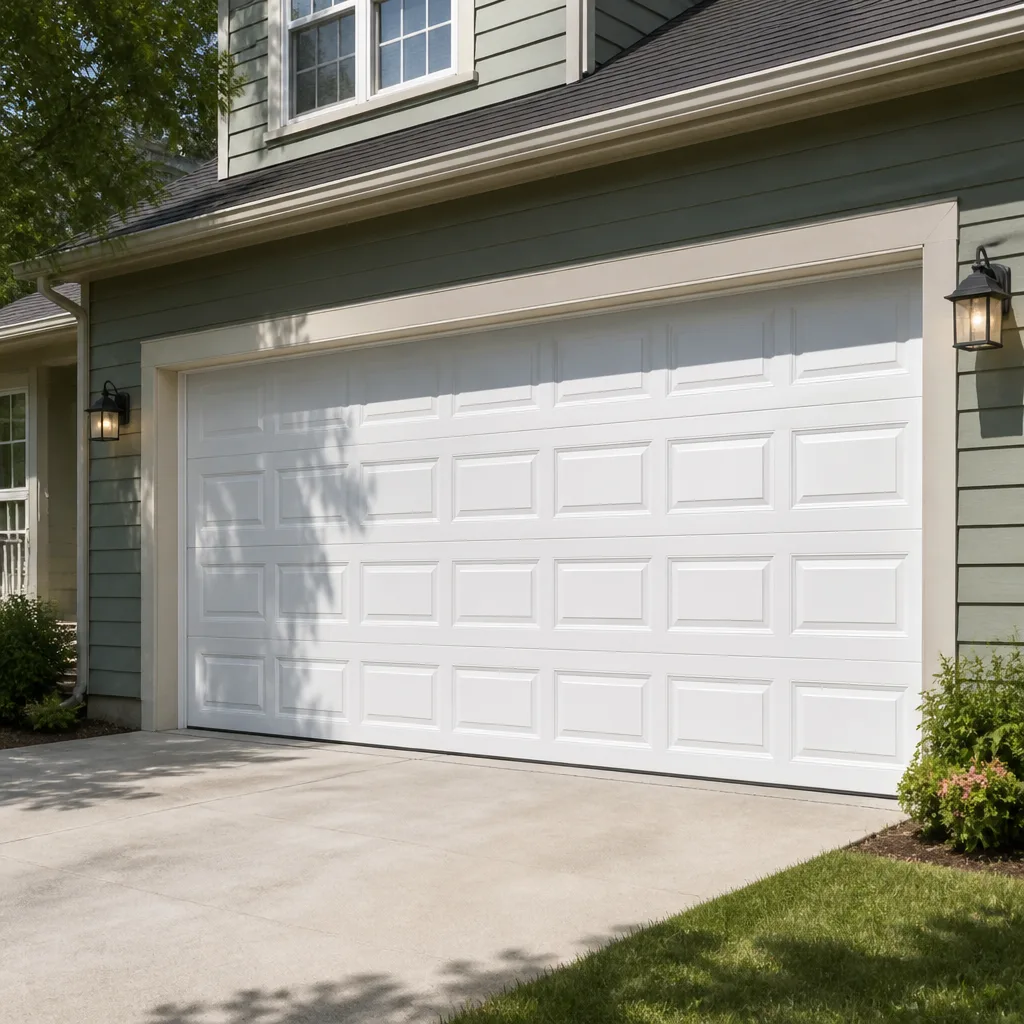 Raised-panel steel
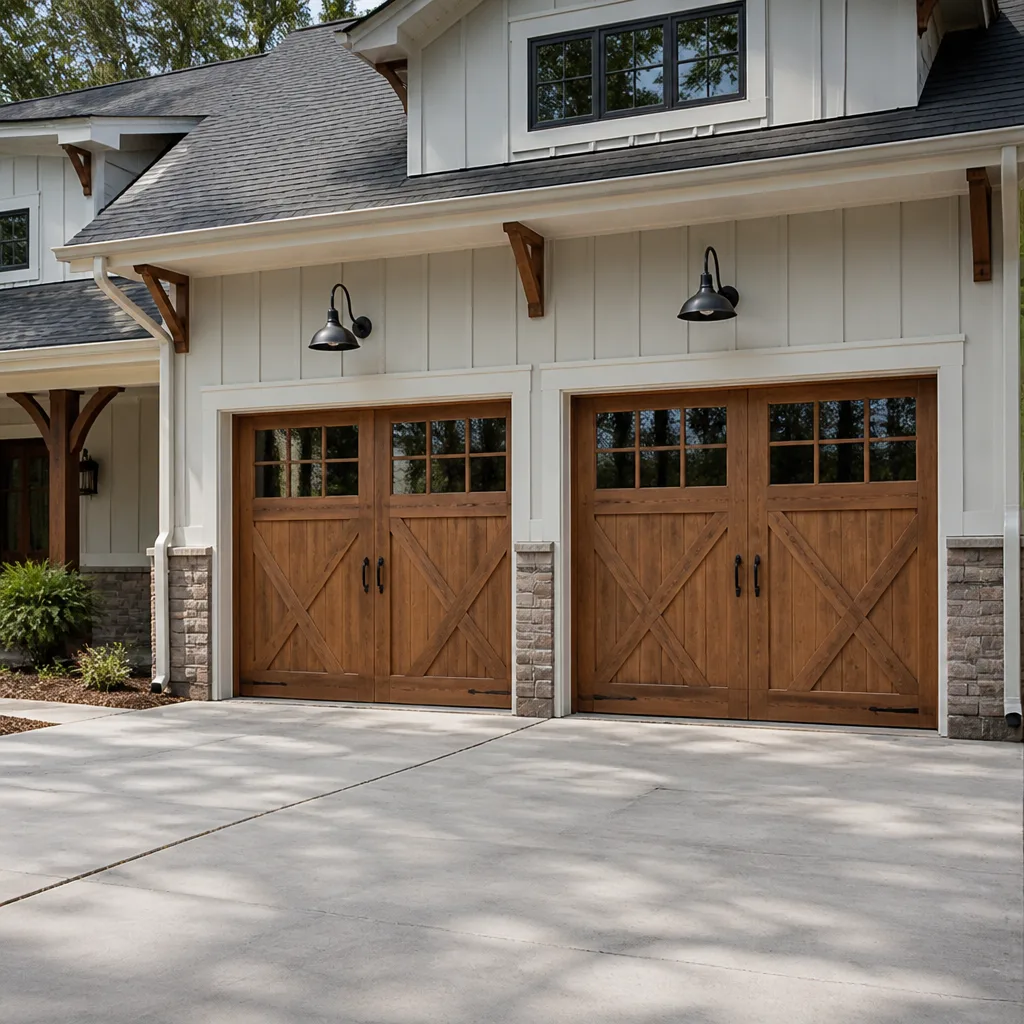 Carriage house
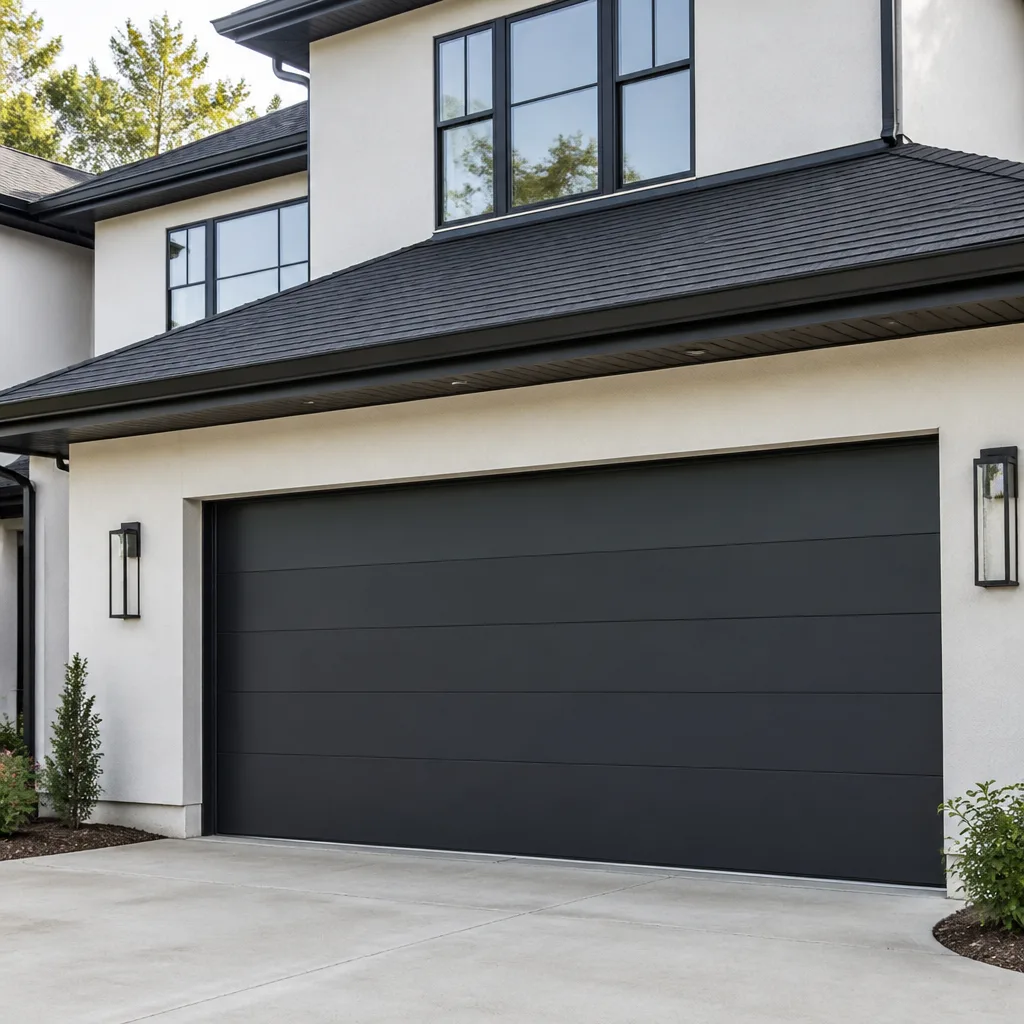 Modern flush
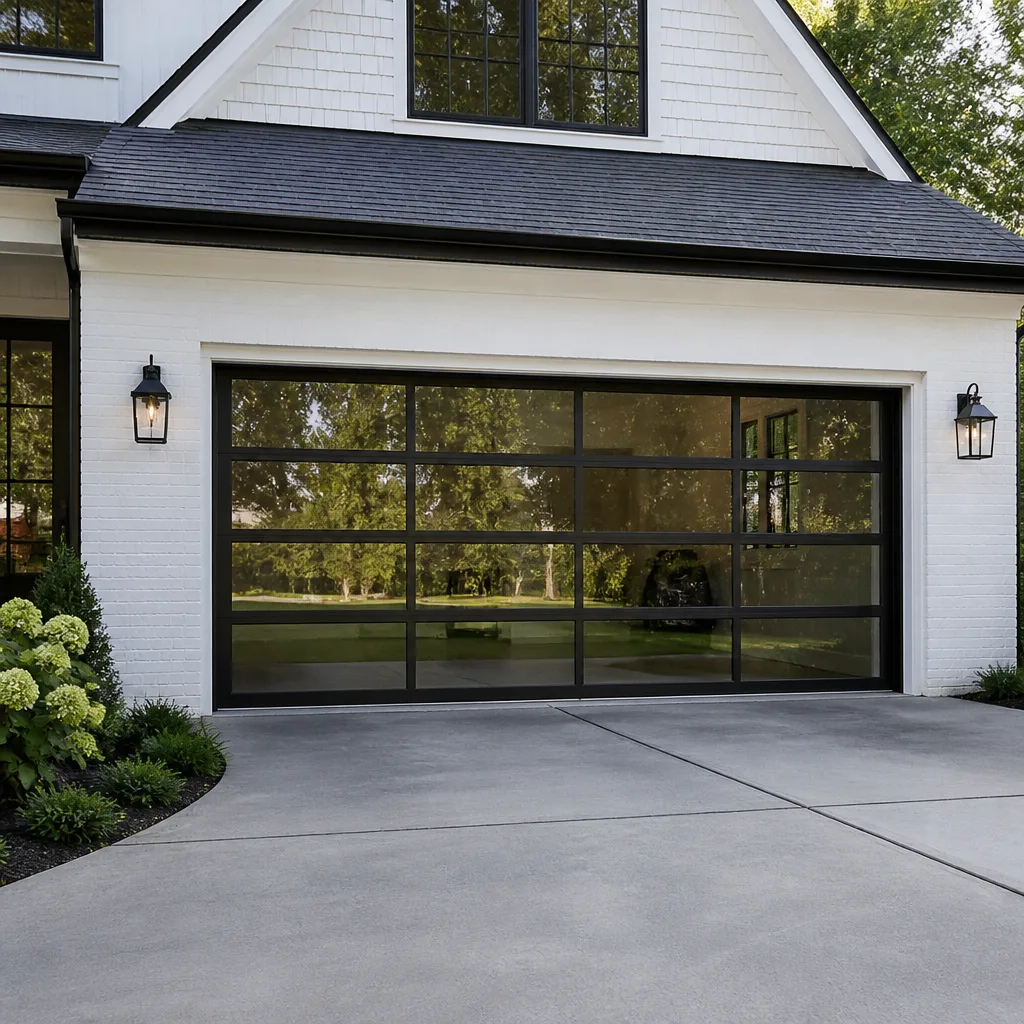 Full-view glass
 LiftMaster openers
 Chamberlain openers
Full 25-point door and opener safety check with every visit - springs, cables, rollers, tracks, and your LiftMaster or Chamberlain opener included
You get a price before we start. It does not change when the pro arrives.
Get your free estimateGarage Door Emergency Preparedness Guide for Toms River Homes
Most homeowners think about their garage door only when it stops working. Storm season flips that thinking. During Superstorm Sandy, a significant number of Shore-area homeowners couldn’t get their cars out because the power was gone and they didn’t know where the emergency release cord was, or that the door had swelled shut in its frame. That’s a solvable problem. Toms River sits directly in the path of the nor’easters and tropical systems that have shut down infrastructure along the Jersey Shore multiple times in the past decade. This guide covers what to do with your garage door before, during, and after a severe weather event: how to lock it down manually, what that red cord actually does, how to operate a door safely when the opener is dead, and when storm damage turns a door into a security gap. Everything here is specific to Toms River homes, not a generic checklist.
Quick Answer
Before a storm, manually lock your garage door using the slide bolts or locking bar on the track, and locate your emergency release cord so you know where it is in the dark. When the power fails, the release cord lets you open the door by hand, but only pull it when the door is fully closed and the springs are under normal tension. After a major weather event, inspect the tracks, panels, and springs before you touch the opener, and call a technician for anything that looks bent, frayed, or loose.
Styles & brands we work with
- Raised-panel steel
- Carriage house
- Modern flush
- Full-view glass
- LiftMaster openers
- Chamberlain openers
Table of Contents
- Pre-Storm Protocol: Locking Down Your Garage Door
- The Emergency Release Cord: What It Does and When Not to Pull It
- Operating Your Door During a Power Outage
- Post-Storm Inspection: What to Check Before You Operate the Door
- When Storm Damage Becomes a Security Gap
- How Wind Pressure and Swelling Affect Toms River Doors
- A Seasonal Preparedness Calendar for Toms River
- When a Storm-Damaged Door Needs a Professional
Pre-Storm Protocol: Locking Down Your Garage Door
When forecasters start tracking a system up the coast, most people stock water and charge phones. Almost nobody thinks about the garage door. But a garage door is the largest moving opening on most Toms River homes, and it’s a wind-pressure target. The good news is that you can manually lock a garage door to help it resist wind pressure, and most homeowners don’t know this is even possible.
Here’s how to lock down your door before a storm arrives:
- Close the door fully and confirm it’s seated against the floor. A door that’s even an inch up lets wind get underneath and start working on the panels.
- Locate your manual lock. Many residential doors have slide bolts on the inside of the bottom section, or a locking bar that drops into the vertical track. If your door has a side lock, engage it. If it has slide bolts, push them into the track on both sides.
- If your door has no manual lock (common on newer doors with automatic openers), the opener’s trolley is holding the door. Don’t disconnect it. Instead, check that the door is fully closed and the opener is engaged.
- Clear the tracks of debris, leaves, and anything that could jam the door if wind pushes it.
- Move vehicles and anything valuable out of the garage if flooding is expected. Toms River’s low-lying areas near the river and the barrier-island approaches have flooded before, and a garage full of water is worse than an empty one.
Locking the door manually is a small step that takes two minutes. It won’t stop a direct hit from a falling tree, but it helps the door stay seated and resist the pressure differential that builds during a strong storm.
The Emergency Release Cord: What It Does and When Not to Pull It
That red cord hanging from your opener trolley is the single most misunderstood piece of hardware in the garage. It’s also the one that matters most during a power outage. Here’s what it actually does mechanically, and why pulling it at the wrong moment can trap the door down.
The emergency release cord is connected to a lever on the trolley, the carriage that rides along the opener rail. When you pull the cord, the lever disengages the trolley from the door’s carriage, which separates the door from the opener’s drive system. Once released, the door moves freely by hand. The opener can no longer pull it up or hold it down.
That’s the good news. The bad news is the timing:
- Pull it only when the door is fully closed. If you pull the cord while the door is partway up or partway down, the door can drop suddenly because the springs and the opener were sharing the load. That’s a serious hazard.
- Don’t pull it if the springs look broken. A door with a broken spring is heavy and unbalanced. Releasing the trolley on a door with a snapped spring can let it crash down.
- Don’t pull it to “test” the door. Some homeowners pull the cord out of curiosity. It re-engages by running the opener, but until then the door is free and can be moved by wind, kids, or pets.
If your opener is a LiftMaster or Chamberlain, the trolley release is the same design: pull down and slightly toward the door to disengage. If you’re not sure which opener you have, take a photo of the unit on the ceiling before storm season so you can identify it later.
Knowing where the cord is before the lights go out is the whole point. During Sandy, plenty of Shore-area homeowners learned where their cord was by feel, in the dark, with a car trapped inside. You don’t have to repeat that.
Operating Your Door During a Power Outage
When the power goes out, your opener is dead but your door isn’t. You can still open and close it by hand, and doing it correctly protects the drive system. Doing it wrong is how people strip gears and bend rails.
Here’s the safe sequence for manual operation:
- Confirm the door is fully closed. Wait until it’s seated, then pull the emergency release cord.
- Lift the door by hand using the bottom section, not the panels near the top. The door should lift with steady resistance. If it feels extremely heavy or won’t stay up when you let go, stop and don’t force it.
- Open it only as far as you need to get the car out, then close it fully and re-engage the trolley by running the opener once power returns.
- Re-engage the opener by pressing the wall button or remote. The trolley will reconnect on its own as it travels.
The common mistakes during an outage:
- Yanking the cord while the door is up, which can let it fall.
- Pulling the door up by the top panel, which bends the section and can pop the rollers out of the track.
- Leaving the door disconnected and then running the opener later, which can jam the trolley against the door’s carriage.
- Forcing a door that won’t lift. If it’s stuck, a spring or cable is likely the problem, and forcing it can cause injury. That’s a job for a trained technician, and it’s exactly the kind of repair our garage door spring repair team handles.
Power outages in Toms River aren’t rare. They happen with nor’easters, with summer thunderstorms, and with the tropical systems that spin up the coast. Knowing how to run your door by hand is basic storm readiness.
Post-Storm Inspection: What to Check Before You Operate the Door
After a major weather event, resist the urge to hit the opener button and see what happens. A storm-damaged door can look fine and still be unsafe to operate. Here’s the inspection sequence we recommend before you run the door.
- Look at the door from the outside first. Check for bent or creased panels, popped hinges, and anything that’s shifted. A panel that’s been pushed in by wind or debris can bind in the track.
- Check the tracks. Run your hand along the vertical and horizontal tracks (with the door closed and the opener off). A track that’s bent or out of alignment will jam the door. Don’t try to bend it back yourself, because misaligned tracks are a common cause of rollers popping out.
- Inspect the springs and cables. Look at the torsion spring above the door or the extension springs along the sides. A broken spring shows a visible gap in the coil. Frayed or kinked cables are a red flag. Never touch a cable under tension.
- Test the balance by hand. With the door disconnected (trolley released, door closed), lift it about halfway and let go. A properly balanced door stays put. A door that drops or won’t stay up has a spring or balance problem.
- Check the weather seal and bottom section. Storm-driven water can warp the bottom seal or the bottom panel. A door that’s swelled in its frame won’t close properly.
- Only then run the opener. Watch and listen. Grinding, popping, or a door that reverses immediately means something is wrong.
If anything on that list looks off, stop and call a professional. Storm damage often hides in the springs and cables, and those are the parts that cause the most injuries. Our garage door repair service covers post-storm inspections and repairs throughout Toms River.
When Storm Damage Becomes a Security Gap
A storm-damaged garage door is a security problem, and it’s worth saying plainly. A door that won’t close all the way, a panel that’s been pushed in, or a track that’s bent out of alignment leaves your garage and the door into your house exposed. That’s not a hypothetical in Toms River after a major storm, when power is out, streets are messy, and repair appointments are backed up.
Here are temporary measures that are actually viable while you wait for a repair:
- Park a vehicle against the inside of the door if the door won’t close and you’re worried about entry. It’s not a lock, but it’s a barrier.
- Use a manual lock or slide bolts if the door closes but the opener is dead. Locking the door manually keeps it seated.
- Board up a broken panel from the inside with plywood if a section is compromised. Don’t drill into the door’s structure, and don’t block the tracks.
- Keep the door closed and disconnected rather than propping it open. An open garage is an invitation.
- Don’t tape or wedge a bent track to force the door to close. A door that comes down crooked can fall.
The longer a damaged door stays that way, the more opportunity there is for the damage to spread. A bent panel can stress the hinges and the opener. A misaligned track can wear the rollers. Getting it looked at quickly is the right move, and emergency garage door service exists for exactly this situation.
How Wind Pressure and Swelling Affect Toms River Doors
Toms River’s weather does two things to garage doors that homeowners don’t always connect: wind pressure and moisture swelling. Both are worse during storm season, and both are worth understanding.
Wind pressure builds on the face of a closed door during a strong system. The door is a broad, flat surface, and the pressure differential between the outside and the inside can flex the panels and stress the hinges and the opener’s hold. That’s why a manually locked door resists better than one held only by the opener’s trolley. The lock shares the load with the track.
Moisture swelling is the quieter problem. Wood-frame doors, and wood or composite bottom sections, absorb moisture during prolonged rain and humid stretches. A door that swelled in its frame can bind, which is exactly the situation that trapped cars during Sandy. The door wasn’t broken. It had swelled and wouldn’t lift by hand because the release cord hadn’t been pulled.
A few things help in Toms River’s climate:
- Keep the bottom weather seal in good shape so water doesn’t wick up into the bottom section.
- Lubricate the hinges, rollers, and springs periodically so a slightly swelled door still moves.
- Check the door’s operation after a stretch of heavy rain, before the next storm.
- If your door is a Clopay or Raynor with a wood or composite bottom section, pay extra attention to the seal and the bottom panel.
Doors that live through a few storm seasons without maintenance tend to develop small problems that become big ones under stress. A pre-season check catches them early.
A Seasonal Preparedness Calendar for Toms River
Storm readiness isn’t a one-time task. It’s a rhythm, and in Toms River the rhythm follows the weather: nor’easters in the colder months, thunderstorms and tropical systems in the warmer ones. Here’s a simple seasonal calendar.
Before Storm Season (Late Summer and Early Fall)
- Test the emergency release cord and re-engage it.
- Lubricate hinges, rollers, and springs.
- Inspect the weather seal and bottom panel.
- Test the opener’s safety reverse with a small object under the door.
- Photograph your opener and door for reference.
When a System Is Forecast
- Close and manually lock the door.
- Clear the tracks.
- Move vehicles and valuables out of the garage if flooding is possible.
- Know where the release cord is and how to use it.
After the Storm
- Run the post-storm inspection sequence before operating the door.
- Check for bent panels, misaligned tracks, and broken springs.
- Address any security gap with temporary measures.
- Schedule a repair if anything looks off.
Before Winter
- Check the door’s balance and the opener’s force settings.
- Confirm the door closes fully and seats against the floor.
A calendar like this takes maybe an hour a year. It’s far less than the cost of a storm repair, and it’s the difference between a door that works when you need it and one that traps your car when the power fails.
When a Storm-Damaged Door Needs a Professional
Some storm damage is cosmetic. Some of it is dangerous, and the line between the two isn’t always obvious. Call a professional if the door won’t close fully, if a track is bent, if a spring shows a gap or a cable looks frayed, if the door drops when you test it by hand, or if a panel has been pushed in and the door binds. Springs and cables are under high tension and cause serious injuries when they fail, so don’t try to adjust them yourself. If your opener runs but the door doesn’t move, or if it reverses immediately, that’s also a call. As a garage door specialist, we only work on garage doors, which means we’ve seen these exact failures before and we know what to look for. Our technicians have up to 14 years of experience, and we work with the brands most Toms River homes have: LiftMaster, Chamberlain, Craftsman, Raynor, Genie, Clopay, Amarr, and Wayne Dalton. Toms River Garage Door Repair Pros offers free estimates in Toms River. Call (855) 726-7559.
Common Mistakes to Avoid
- Not knowing where the emergency release cord is. If you can’t find it in the dark during an outage, you can’t use it. Find it, photograph it, and remember it.
- Pulling the release cord while the door is up. The door can drop. Pull it only when the door is fully closed.
- Forcing a door that won’t lift. A door that resists by hand usually has a spring or cable problem. Forcing it can cause injury and bend the panels.
- Bending a bent track back into place. Track alignment is precise. A track that’s been bent back by hand will often jam again or pop the rollers out.
- Operating the door after a storm without inspecting it. Run the inspection sequence first. A door that looks fine can have a broken spring or a frayed cable.
- Propping a damaged door open for ventilation. An open garage is an invitation. Keep it closed and disconnected until it’s repaired.
- Ignoring the bottom seal. In Toms River’s humid, rainy climate, a worn seal lets moisture into the bottom panel and the door swells and binds. Replace it before storm season.
See the difference
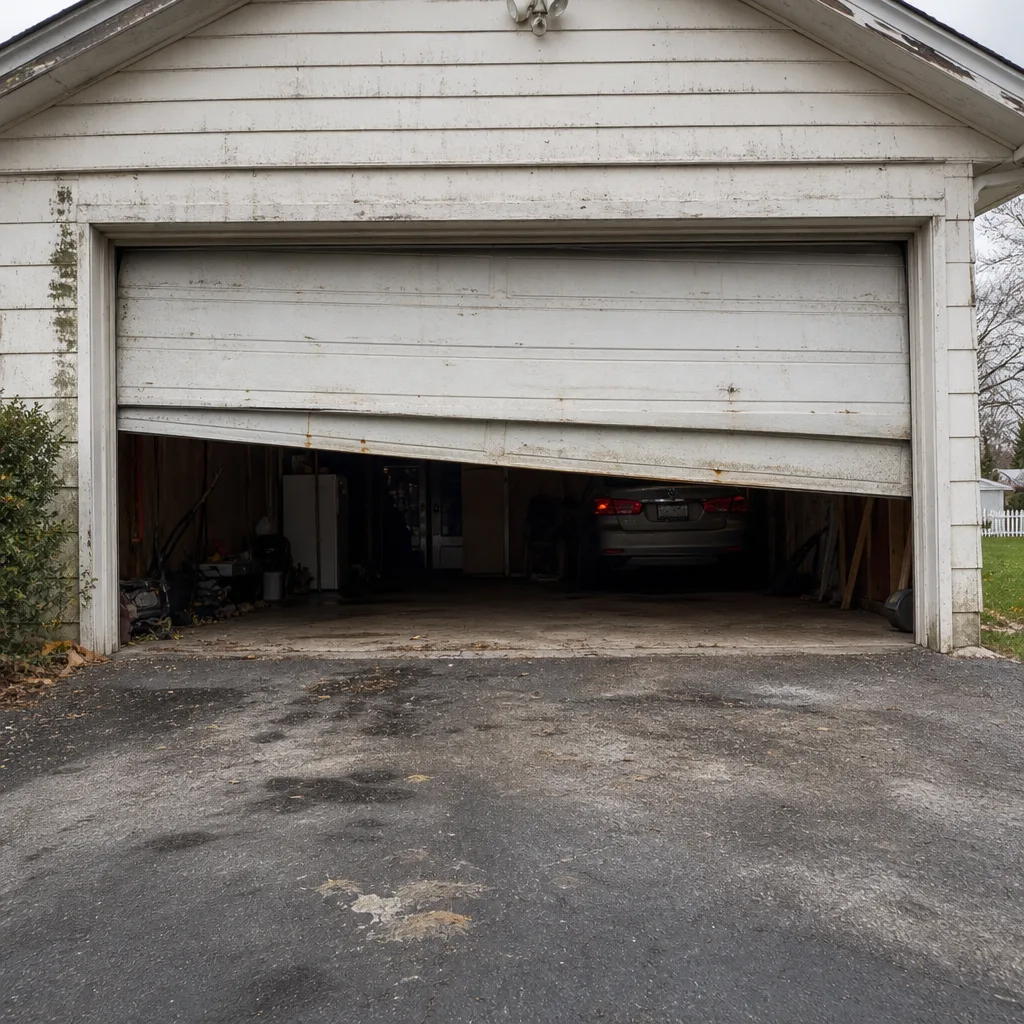 Before
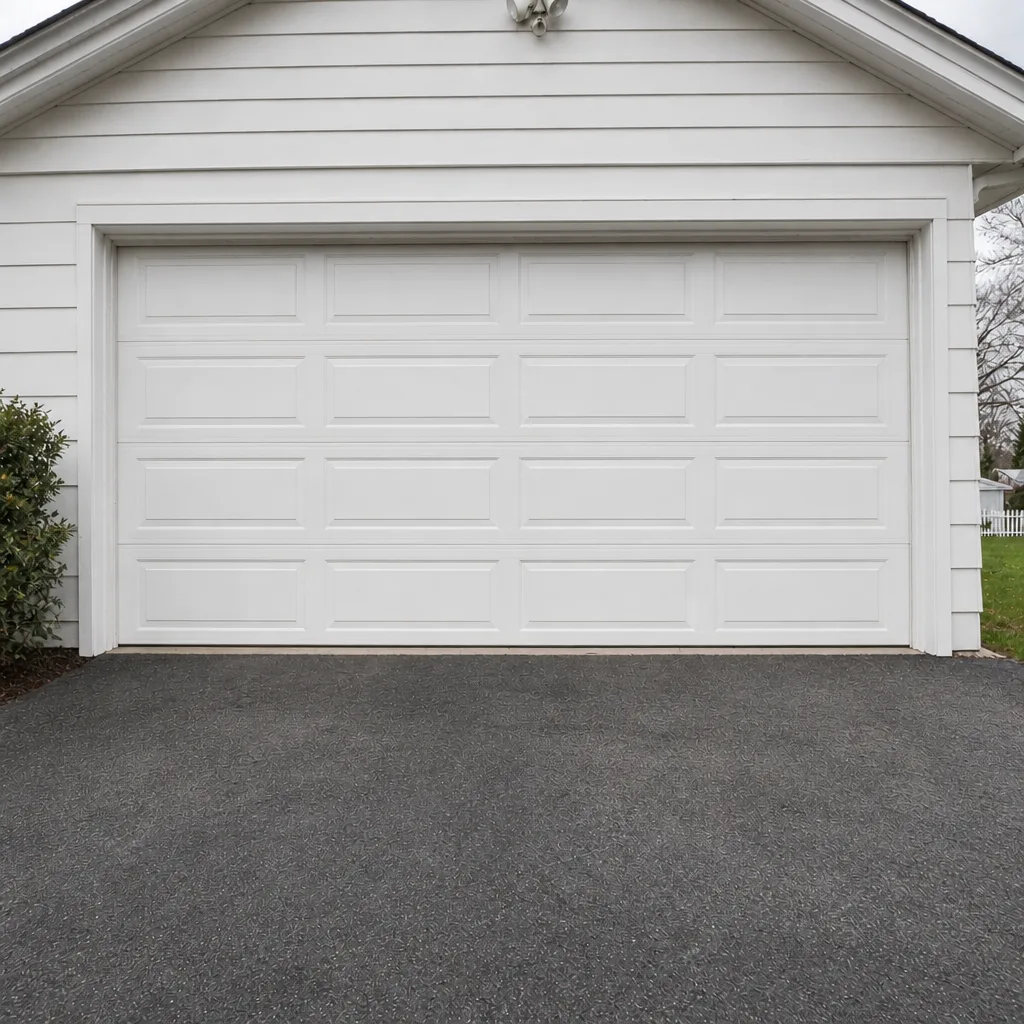 After
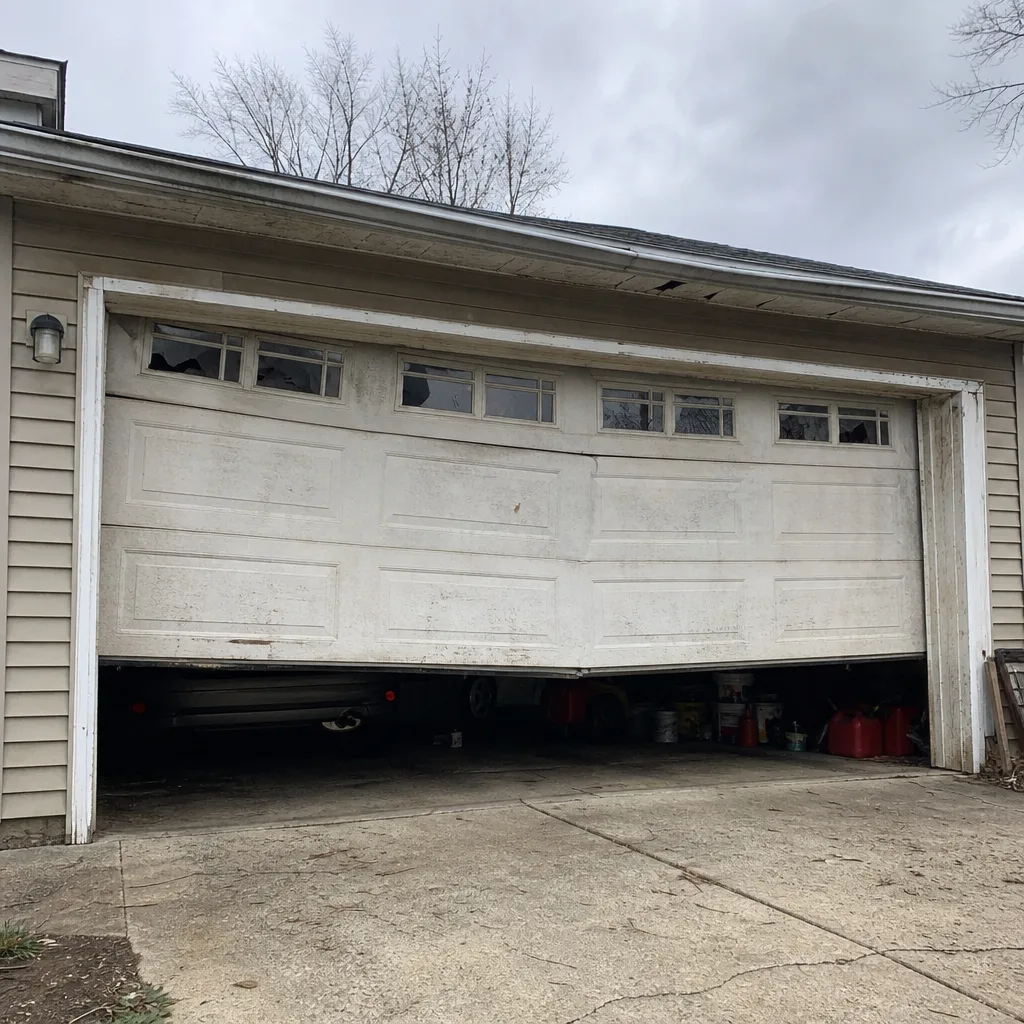 Before
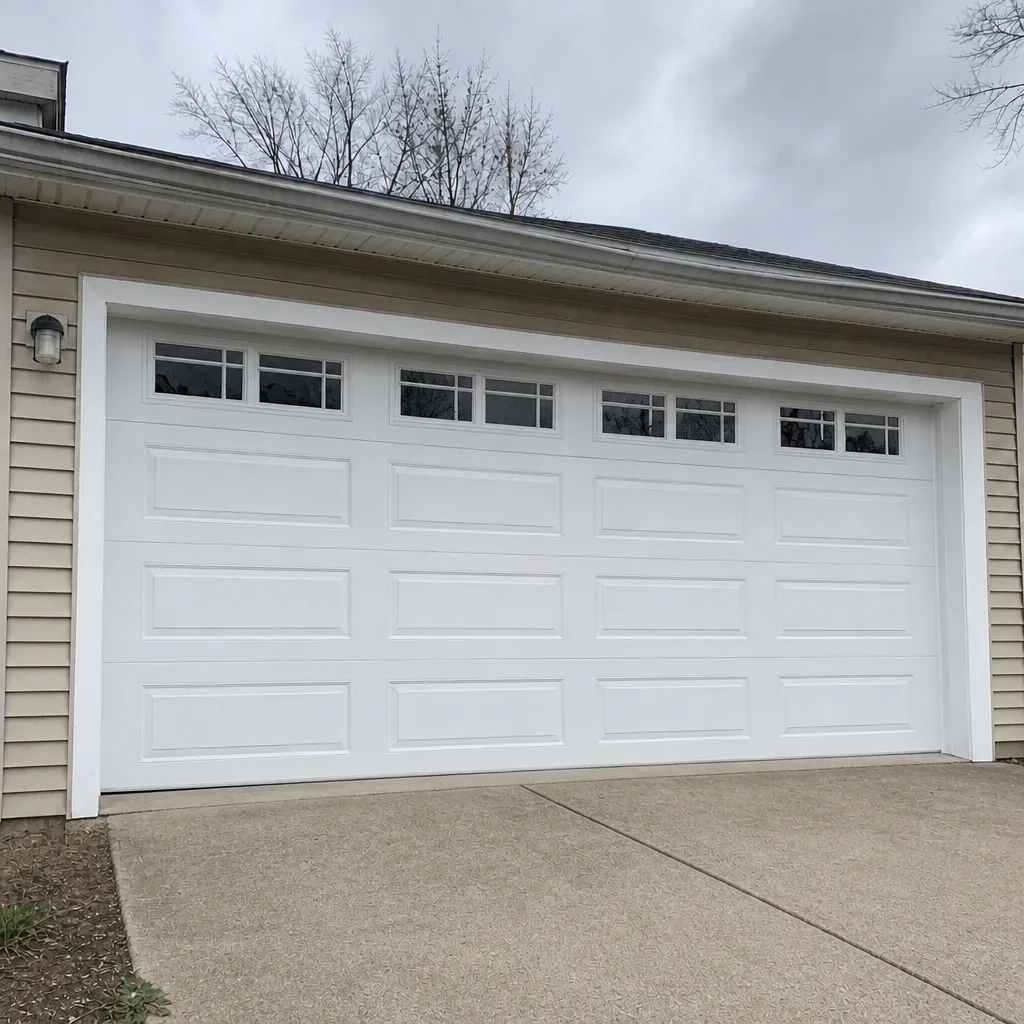 After
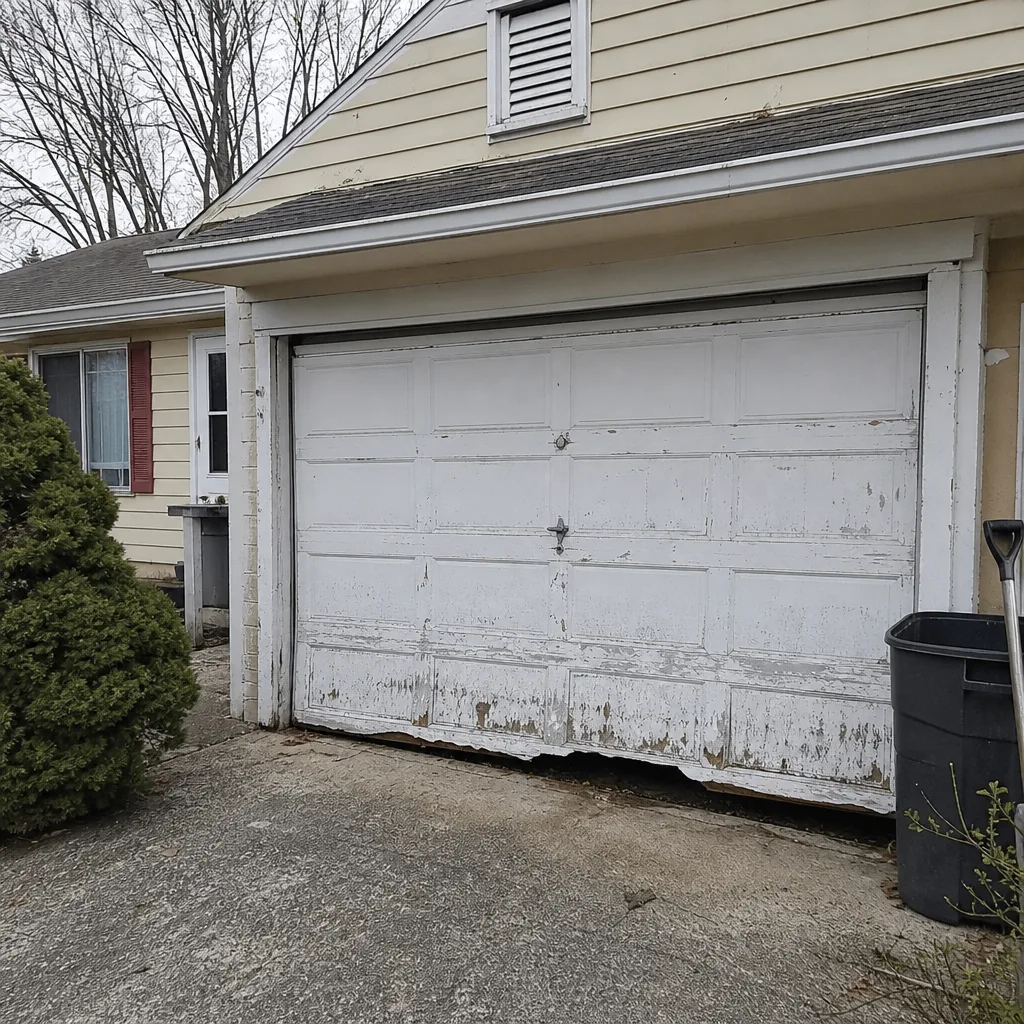 Before
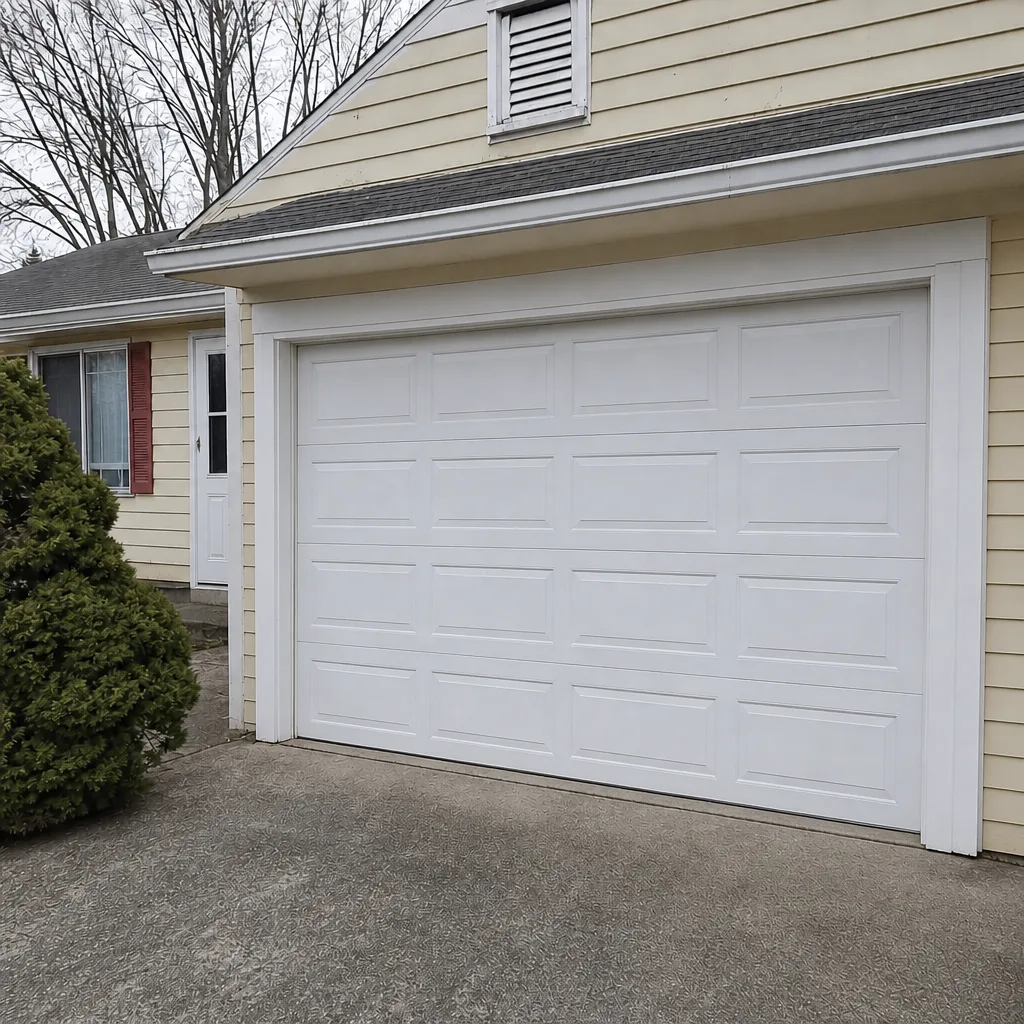 After
When to Call a Professional
Call a professional if your door has been through a storm and shows any of the following: bent panels, misaligned tracks, broken springs, frayed cables, a door that won’t balance, an opener that runs but doesn’t move the door, or a door that won’t close fully and leaves a security gap. Spring and cable repairs are the highest-stakes jobs on a garage door and the ones general handymen most often decline. Don’t wait for a convenient time, because a damaged door tends to get worse. Toms River Garage Door Repair Pros offers free estimates in Toms River, and our technicians have up to 14 years of experience with the brands most homes here have. Call (855) 726-7559.
Frequently Asked Questions
Close the door fully, engage any manual lock or slide bolts, clear the tracks, and confirm your emergency release cord is accessible. If flooding is possible, move vehicles and valuables out of the garage. A door that’s fully seated and manually locked resists wind pressure better than one held by the opener alone.
It disengages the opener trolley from the door so you can move the door by hand. Pull it only when the door is fully closed, because pulling it while the door is up can let the door drop. Once power returns, running the opener re-engages the trolley automatically.
Yes. Pull the emergency release cord with the door fully closed, then lift the door by the bottom section by hand. Close it fully afterward and re-engage the opener when power returns. If the door won’t stay up when you let go, it has a spring or balance problem and needs a technician.
Check the panels for bends, the tracks for alignment, the springs for a visible gap, the cables for fraying, and the balance by lifting the door by hand. Run the opener only after those checks pass. If anything looks off, stop and call a professional.
Yes, if the door won’t close fully or a panel is compromised. Park a vehicle against the inside of the door, engage a manual lock if the door closes, and board up a broken panel from the inside with plywood. Keep the door closed rather than propped open, and schedule a repair as soon as you can.
Emergency garage door service is available for urgent failures, and we aim to get you back up and running the same day when we can. Call (855) 726-7559 for an exact quote. Estimates are free, and the price is quoted and agreed before any work starts.
The Bottom Line
Storm preparedness for your garage door comes down to a few habits. Know where your emergency release cord is and how to use it safely. Manually lock the door before a system arrives. Inspect the door after the storm before you run the opener. And treat a damaged door as a security gap that needs attention, not something to live with. Toms River’s weather makes these habits worth building. Our garage door opener repair team and our repair technicians handle everything from a bent panel to a broken spring, and we only do garage doors, which means we’ve seen these failures before. When you need help, Toms River Garage Door Repair Pros is one call away.
Call (855) 726-7559 for a free estimate. We’ll walk you through what your door needs, quote it upfront, and agree on the price before any work starts.
Written by the team at Toms River Garage Door Repair Pros.