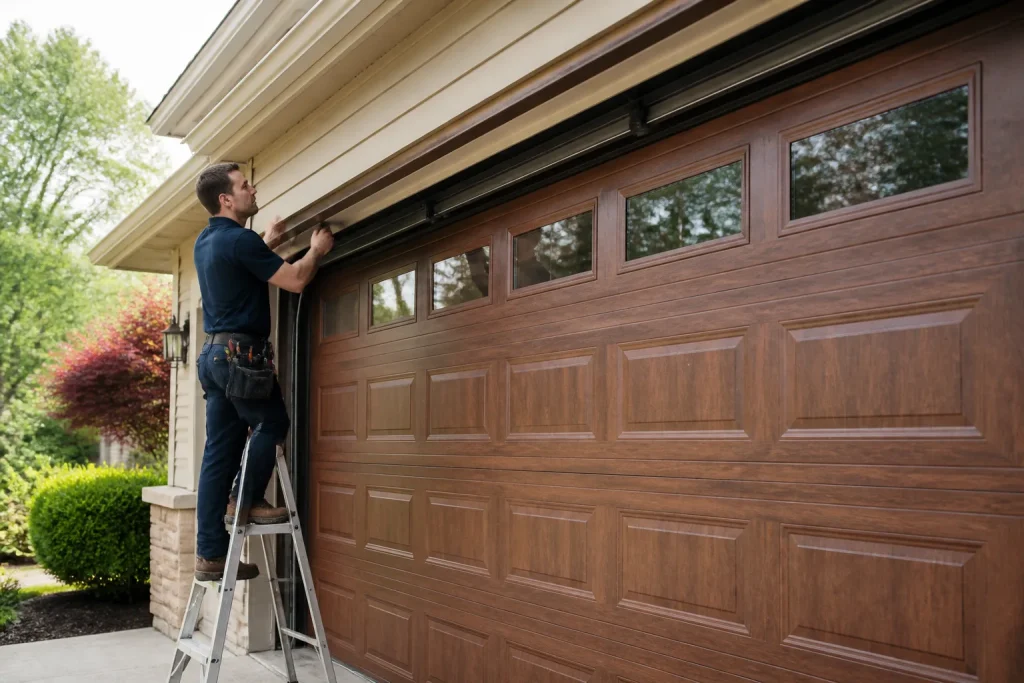
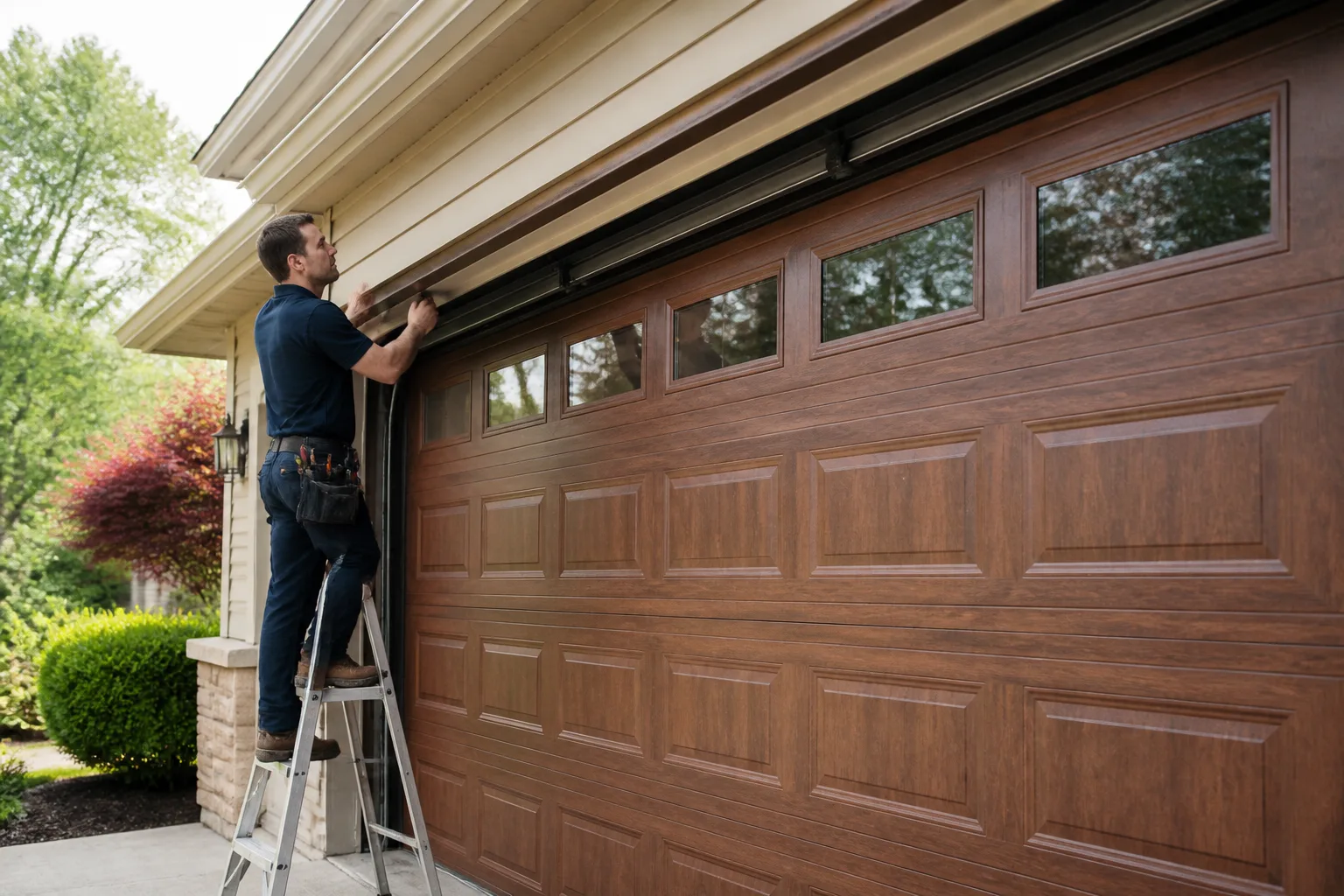
Top Signs You Need Garage Door Service – Don’t Ignore These
A garage door that’s “a little slow” and a garage door that drops without warning are often separated by exactly one frayed cable strand, and that strand is invisible until it’s not. Most homeowners call us after the noise has been there for months, or worse, after the door has stopped moving entirely. The signs that a door needs service rarely appear all at once. They stack up quietly, each one quietly loading more stress onto the next component, until something fails at the worst possible moment. Here’s what each warning sign actually means mechanically, and what it’s likely to cost you if you let it sit for another month. If reading this makes you want a second opinion, call (855) 726-7559 and we’ll take a look.
What Does Each Garage Door Noise Actually Mean?
Every sound a garage door makes points to a specific component, and the difference between a $150 fix and a $600 fix is often whether you call when you first hear it. Grinding usually means the rollers have worn flat, or the track has bent slightly and the roller is dragging metal on metal. Popping tends to come from a torsion spring that’s beginning to bind or a cable that has jumped its drum. Rattling points to loose hinges, brackets, or bolts that have worked themselves free from the vibration of daily use. Squealing is almost always dry bearings or rollers that need lubrication, and it’s the cheapest of the four to address. Here in Toms River, we hear all of these regularly, and the pattern is consistent: a squeal ignored for 90 days turns into a grinding noise, and a grinding noise ignored for another 90 days turns into a snapped cable or a broken spring. Our technicians have up to 14 years of experience, and the one thing they’ll all tell you is that the noise is always cheaper to fix than the failure that follows it.
- Grinding: worn rollers or a misaligned track; waiting risks damage to the panel surface too
- Popping: a binding spring or a cable off its drum; waiting risks a full spring or cable failure
- Rattling: loose hardware; cheap now, but vibration loosens more over time
- Squealing: dry bearings; the least urgent, but the easiest one to ignore until it isn’t
Why Is an Uneven Garage Door Never Just Cosmetic?
When one side of the door sits lower than the other, the springs are no longer sharing the load evenly. Torsion springs are wound to a matched pair, meaning each one carries roughly half the door’s weight. If one spring loses tension, the other is suddenly carrying more than it was designed for, and it’s being asked to do that on every single open and close. On a two-spring door, that imbalance accelerates wear on the good spring too, which is why we almost always replace a matched pair together rather than one at a time. The lagging side also drags the door against its track, wearing the rollers unevenly and eventually bending the horizontal track itself. A door that runs uneven for a few months can go from a spring repair to a spring, roller, and track repair. We see this pattern often in Toms River, and it’s the single most common reason a “small” problem turns into a bigger invoice down the road. If your door looks crooked when it’s halfway up, don’t wait for it to look crooked when it’s fully open.
Is Your Opener Slow, or Is It Dying? A Simple Timing Test
A slow opener usually points to one of two very different problems, and the fix ranges from an inexpensive capacitor swap to a logic board replacement. Here’s how to tell them apart without opening the housing. Time the door from fully closed to fully open. Then time it again on the way down. If both directions are slow and the door moves at the same sluggish pace every time, you’re likely looking at a failing capacitor, which is a relatively cheap component to replace on most Genie and LiftMaster units. If the door hesitates, stutters, or reverses unpredictably at the same point every cycle, that points to a logic board or safety sensor issue, which is the more expensive repair. A third pattern: the door is fast on the way up but slow on the way down, or vice versa, which usually means the springs are the problem, not the opener at all. That last one trips up a lot of homeowners in Toms River who assume the motor is the culprit when the real issue is upstairs on the torsion bar.
Where Should You Check for Rust on an Ocean County Garage Door?
Rust rarely starts where people look. Homeowners check the big flat panels and conclude the door is fine, when the corrosion that matters is hiding in the moving parts. On Toms River doors, the places worth checking are the bottom brackets where the cables attach, the hinges along the panel seams, the roller stems, and the track where it meets the floor. That last spot is the one most people miss: the bottom of the track sits inches from a concrete floor that stays damp through humid stretches, and rust there starts quietly and eats into the roller path. A flashlight and five minutes is all it takes. What you’re looking for is not surface discoloration but pitting, flaking, or rust that has started to compromise the thickness of the metal itself. If a bottom bracket or cable end shows that kind of rust, stop using the door and have it looked at, because those are the parts holding the tension. A Clopay or Amarr steel door can last a long time here if the hardware underneath is maintained; the panels are rarely the first thing to go.
What Is a Worn Bottom Seal Costing You in a Jersey Shore Summer?
A cracked, flattened, or missing bottom seal lets hot, humid summer air straight into the garage, and that moisture doesn’t stay on the floor. It condenses on the concrete, wicks into the framing at the base of the walls, and creates the kind of damp environment that invites mold and warps the bottom of the door panels over time. The seal is one of the cheapest parts on the entire door, and it’s also one of the most ignored. Look at it from inside with the door closed: if you can see daylight underneath in patches, or if the rubber has gone stiff and flat instead of springy, it’s not doing its job. This matters more in Toms River than in drier climates because the summers here stay muggy for months, and a garage that never dries out becomes a growing problem for the whole house. Replacing a bottom seal is a quick job, but if the door frame or the panel bottom has already started to rot from trapped moisture, that’s a bigger repair. Catch the seal first.
When to Call a Pro
Some of what’s above you can check yourself: listen for the noises, time the opener, shine a light on the bottom brackets, look for daylight under the seal. What you shouldn’t do yourself is anything involving the springs, the cables, or the torsion bar. Those parts are under extreme tension, and a spring or cable that lets go while you’re working near it can cause serious injury. This is one of the most dangerous DIY repairs a homeowner can attempt, which is why we treat spring work as an explicit specialty rather than an afterthought. If any of the signs above point to the springs or cables, stop and call us. Back up and running the same day is the goal on most repairs, and we only do garage doors, which means we’ve seen this before, whatever brand is on your wall.
Related services in Toms River: whether you’re dealing with a snapped spring, an opener that won’t respond, or a door that’s jumped its track, our garage door repair covers the full range. If the motor is the problem, see garage door opener repair; if it’s the springs, garage door spring repair is where to start. And if you just want to talk it through with someone who works on doors all day, our Toms River Garage Door Repair Pros main page has the full picture.
The Bottom Line
Every warning sign on a garage door is a countdown, not a permanent state. That slow opener, the grinding roller, the uneven lift, the rusting bracket, the worn seal: each one is quietly transferring stress onto something else, and the fix gets more expensive the longer you wait. The pattern we see across Toms River is consistent. Homeowners who call at the first squeal spend less than homeowners who wait for the drop. If you’re in Toms River and need help, Toms River Garage Door Repair Pros offers free estimates. Call (855) 726-7559 and we’ll tell you straight what your door needs and what it doesn’t.
Frequently Asked Questions
Most garage doors need repair, not replacement. A single broken spring, a worn roller, a bent track, or a failing opener is almost always fixable on the existing door. Replacement usually makes sense when the panels themselves are structurally compromised, when the door is badly out of balance after repeated repairs, or when the door has reached the end of its serviceable life. In Toms River, we look at the frame, the panels, the springs, and the opener as a system before recommending either path. A free estimate will tell you which side of that line your door is on, and it costs nothing to find out. Call (855) 726-7559.
You can lubricate the rollers, hinges, and track yourself with a garage-door-specific lubricant. That’s a routine maintenance task, and it’s safe to do. What you shouldn’t touch is the springs, cables, or torsion bar, which carry enough stored energy to cause serious injury if handled incorrectly. If lubrication doesn’t quiet the noise, the problem is mechanical and worth a professional look. Call (855) 726-7559 for a free estimate.
Not long. A squeal from dry bearings is the most forgiving and can wait a few weeks. A grind or pop from a worn roller or a binding spring is a different story, and the longer you run it, the more likely you are to be looking at a spring or cable failure instead of a simple component swap. Our technicians have up to 14 years of experience, and the consistent lesson is that the noise is always cheaper to fix than the failure. If you’re uncertain which category yours falls into, call (855) 726-7559 and describe the sound. We’ll tell you how urgent it is.
Yes, in different ways. Summer humidity swells wood frames and stresses seals, and it keeps the garage damp enough to accelerate rust on any exposed hardware. Winter cold stiffens lubricants and makes metal more brittle, which is when springs are most likely to snap. The hardware on a Wayne Dalton or Craftsman door is durable, but it still responds to the temperature swings we get here. A door that’s maintained through both seasons lasts longer than one that only gets attention when it stops working. Call (855) 726-7559 for a free estimate on a tune-up or repair before the next season change.
Written by the team at Toms River Garage Door Repair Pros.
Need Garage Door Help?
Call Toms River Garage Door Repair Pros - the local pro we connect you with is licensed and insured, here with fast after-hours help in Toms River.
(855) 726-7559